Lake Como Style
2025
Freelance Developer
International (Italy)

Lake Como Style

Freelance Project

Architected a high-performance, cinematic event booking platform using the bleeding-edge Next.js 16 and React 19 stack. Engineered a scalable content management system with Sanity to handle 11+ custom schema types, ensuring seamless client updates. Implemented complex UI animations using Framer Motion and Lenis for smooth scrolling, while building a robust transactional email service with Nodemailer for automated booking confirmations.

Scroll to explore

Project Highlights

Key metrics and achievements that define this project

0+
Technologies
0
Year Released
Freelance Developer
Role

Interested in This Project?

Explore the live demo, check the code, or reach out to discuss it

Full Case Study

See the delivery timeline, architecture notes, and decision tradeoffs.

A recruiter-friendly breakdown of how I translated a cinematic event brand into a production booking site with a structured Sanity content model, smooth motion, and operational email flows.

The Challenge

Creating a luxury event booking platform for an international client required managing complex state, real-time availability, multi-language support, and cinematic animations while maintaining peak performance across devices.

The Solution

Leveraged Next.js 16's advanced caching and React 19's concurrent features. Built a headless CMS architecture with Sanity for flexible content management. Implemented server-side rendering for SEO and client-side interactivity for smooth UX.

Key Learnings

Mastered bleeding-edge React Server Components, optimized international performance with edge functions, and learned to balance stunning visuals with accessibility and performance constraints.

Project Case Study Timeline

Delivery Decisions, Not Just Screenshots

A phase-by-phase record of how the work was scoped, built, and carried into production.

Problem / DiscoveryFeatured

Discovery and scope framing

2025-Q1

Mapped the booking flow, content update requirements, and the visual expectations for a luxury event experience before implementation started.

Technical Notes

Kept the project on a headless CMS path so non-developer updates would not require code edits for venue, event, and narrative content.

Outcome

The build started with a constrained content and interaction scope instead of styling-first iteration.
ArchitectureFeatured11+ custom schema types

Content architecture with Sanity

Defined the project around a scalable content model so the site could support rich editorial updates without rewiring the frontend.

Technical Notes

The current project description already notes 11+ custom schema types, which became the backbone for flexible admin-managed publishing.

Implementation

Frontend implementation on the Next.js 16 stack

Built the cinematic frontend using Next.js 16, React 19, TypeScript, and Tailwind while preserving responsive behavior across project sections.

Technical Notes

Server rendering handled the SEO-critical shell while client interactivity was reserved for motion-heavy areas where it materially improved the experience.

Optimization

Animation and delivery optimization

Balanced Lenis and Framer Motion effects against accessibility and performance so the site stayed cinematic without collapsing on smaller devices.

Technical Notes

Reduced-motion considerations and careful animation placement were treated as engineering constraints, not post-launch cleanup.

Outcome

The presentation layer stayed premium without making motion the only way to understand the interface.

LaunchFeatured

Launch readiness and booking communication

Completed the production path with automated booking confirmations and a publishable content workflow for ongoing client updates.

Technical Notes

Transactional email support was included in the initial delivery rather than handled as a separate operational patch.

Outcome

The site shipped with both presentation and booking-response mechanics in place.

Key Decisions

Engineering tradeoffs that shaped the build

A compact snapshot of the technical and product decisions that had the biggest impact on delivery.

Use a headless CMS instead of hard-coded event content

A premium event site changes often: venues, editorial copy, event details, and booking-related content all move faster than a static portfolio-style frontend usually can.

Decision

I structured the project around Sanity so content changes could be made through an editorial workflow rather than through repeated code edits.

Keep the site mostly static and update content in codeUse a lightweight JSON-driven setupModel the content in Sanity

Impact: The README-backed schema strategy made the site easier to evolve once the presentation layer was already live.

Tradeoff: The content model and frontend queries took more upfront design work than a simpler static build.

Treat motion as a system constraint, not decoration

The brand needed cinematic movement, but the site still had to remain readable and responsive across devices.

Decision

I kept the motion identity, but reserved it for areas where it improved perceived quality without obscuring the content model.

Use large motion set pieces across every sectionKeep the interface mostly staticApply Framer Motion and Lenis only where they improved pacing and transitions

Impact: The final UI stayed premium without making animation the only source of differentiation.

Tradeoff: That meant turning down some visual spectacle to keep the experience stable and legible.

Include booking-response email handling in the core delivery

A visually strong event site still fails operationally if booking inquiries disappear into a passive form inbox.

Decision

I implemented the outbound booking confirmation path with Nodemailer during the main build.

Ship the marketing site first and add email laterDelegate responses entirely to third-party toolingOwn the transactional email path inside the project

Impact: The delivered product covered both the public brand layer and the immediate communication workflow.

Tradeoff: Email handling added backend responsibility to what could have been treated as a purely presentational site.

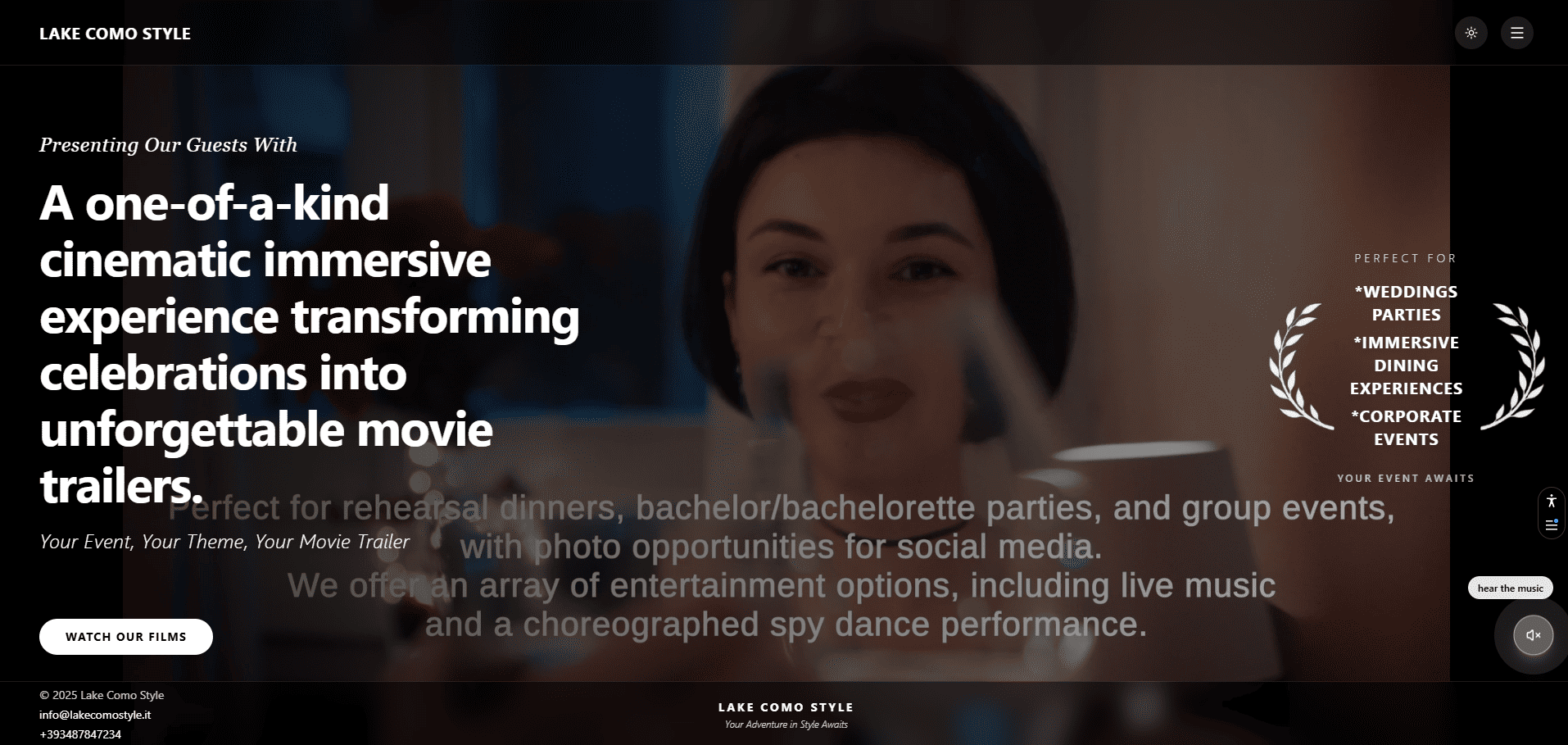
Visual Showcase

A closer look at the shipped interface

This screen captures the production-facing design language, layout rhythm, and overall polish of the experience.

AssetProject Poster
Open Live Demo
Tech Stack

Built With

Scroll to explore technologies →

Next.js 16

React 19

Sanity CMS

Tailwind CSS 4

Framer Motion

TypeScript

AnkurOS·v0.134.7ready·--:--:--

Full-stack software engineer portfolio · Initialising

-- projects · -- certificates · -- blog posts

Loading0%
Loading AnkurOS